Mount Logan
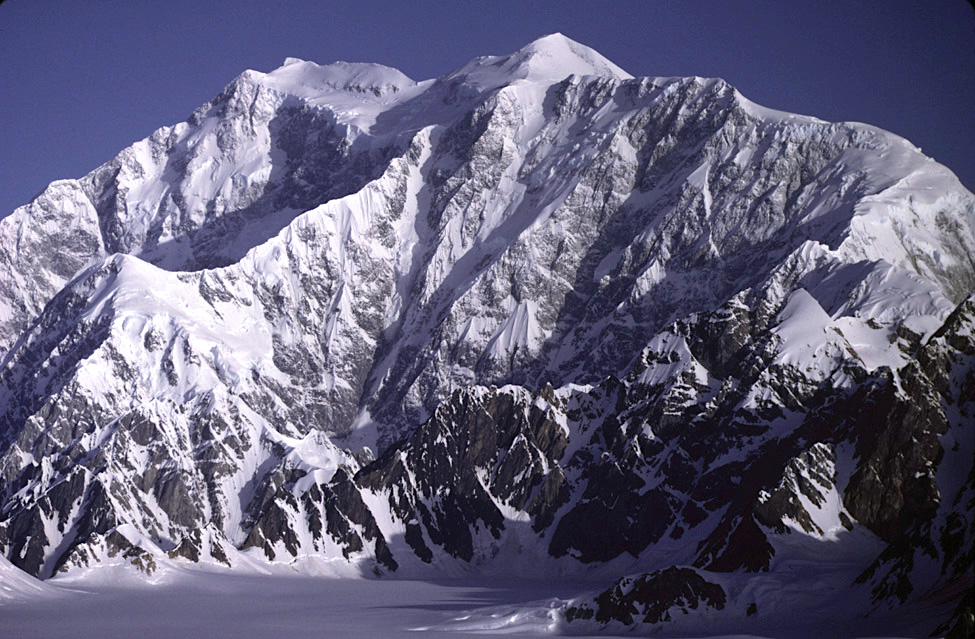
Mount Logan is the highest mountain in Canada, and the second-highest peak in North America after Denali. The mountain was named after Sir William Edmond Logan, a Canadian geologist and founder of the Geological Survey of Canada (GSC).
- Elevation
- 5,959 m
- Prominence
- 5,250 m
- Coordinates
- 60.56722° N, 140.40278° W
- Range
- Saint Elias Mountains
- Region
- Yukon, Canada
About Mount Logan
Mount Logan, elevation 5,959 m, is Canada’s highest mountain and the second-tallest peak in North America; it lies in Yukon’s Kluane National Park and Reserve in the St. Elias Range.
Open Mount Logan in Traverse at 60.56722° N, 140.40278° W to inspect 5,959 m of relief, 5,250 m of prominence, and approaches around Yukon, Canada on 3D terrain.
Documented mountaineering milestones
- 1925 — First ascent of Weak Peak and High Peak by a joint Canadian–U.S. expedition: Led by Albert H. MacCarthy
- 1950 — Second ascent of Mount Logan’s central/highest summit: Norman H. Read and André Roch
- 1987 — First winter ascent via the King Trench: Todd Frankiewicz, Willy Hersman, Steve Koslow, George Rooney, Vernon Tejas, and John Bauman
Routes and approaches
Recognised expeditions into the Icefield Ranges commonly use aircraft access to a glacier landing site, while ascents of the taller mountains involve extensive glacier travel and typically take about 10 days to three weeks depending on the route. (Parks Canada)
GPX-backed hiking and ski touring records near Yukon from the Traverse catalog. Metrics appear only when the source provides them.
More mountains in Traverse
Sources and provenance
- Wikidata
- Wikipedia
- Wikimedia Commons image
- Google Trends comparison
- Historical or route context
- Historical or route context
- Historical or route context
- Historical or route context

Mountain information is factual reference only, not a current conditions or safety report.
Page reviewed .