Mount Elbrus
Mount Elbrus is the highest mountain in Russia and Europe. It is a dormant stratovolcano rising 5,642 m (18,510 ft) above sea level, and is the highest volcano in Eurasia, as well as the tenth-most prominent peak in the world.
- Elevation
- 5,642 m
- Prominence
- 4,741 m
- Coordinates
- 43.35254° N, 42.43787° E
- Range
- Bokovoy Range
- Region
- Elbrussky District, Russia
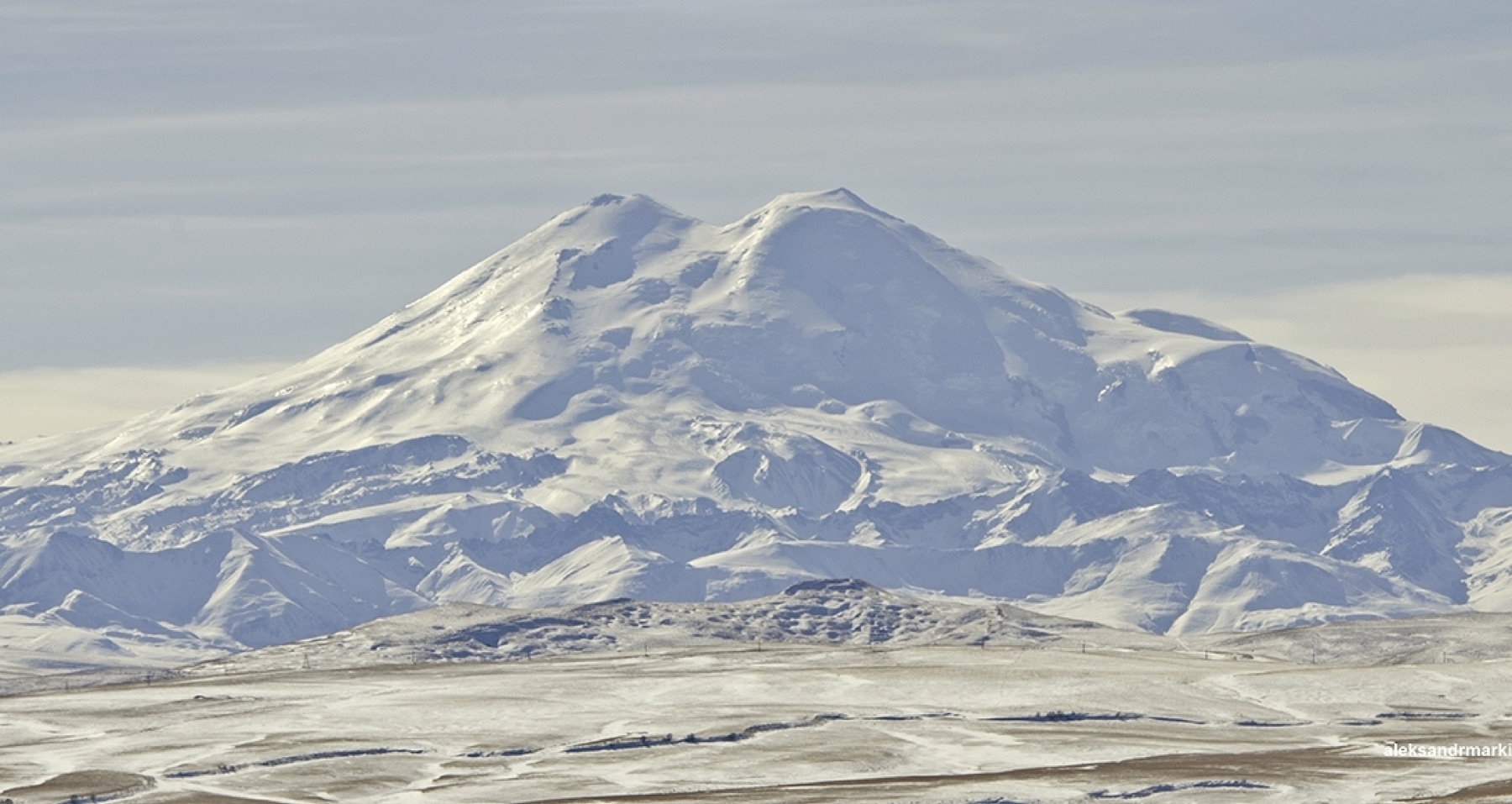
About Mount Elbrus
Mount Elbrus is an extinct volcano in southwestern Russia and the highest peak of the Caucasus, with twin cones reaching 5,642 m and 5,595 m. Under the commonly used Europe–Asia boundary that places the Caucasus in Europe, its 5,642 m summit is Europe's highest, and the mountain has distinct east and west summits.
Open Mount Elbrus in Traverse at 43.35254° N, 42.43787° E to inspect 5,642 m of relief, 4,741 m of prominence, and approaches around Elbrussky District, Russia on 3D terrain.
Documented mountaineering milestones
- 1829 — First recorded ascent of the lower east summit: Killar Khashirov
- 1874 — First ascent of the higher west summit: Florence Crauford Grove, Frederick Gardiner, Horace Walker, Peter Knubel, with local guide Akhia Sottaiev leading the team
- 1959–1976 — Cable-car system constructed in stages to approximately 3,800 m, marking a major change in access to the mountain's standard climbing area: Soviet-era builders and mountaineering authorities
Routes and approaches
The commonly used route approaches from the south via the cable-car system to about 3,800 m and then follows a relatively direct snow-and-ice ascent from its upper terminus, while NASA notes that Elbrus has a wide variety of routes.
GPX-backed hiking and ski touring records near Elbrussky District from the Traverse catalog. Metrics appear only when the source provides them.
More mountains in Traverse
Sources and provenance
- Wikidata
- Wikipedia
- Wikimedia Commons image
- Google Trends comparison
- Historical or route context
- Historical or route context
- Historical or route context

Mountain information is factual reference only, not a current conditions or safety report.
Page reviewed .