Mount Kilimanjaro
Mount Kilimanjaro is Africa's highest mountain and the world's highest free-standing mountain, a dormant volcanic massif rising above the savanna of northern Tanzania.
- Elevation
- 5,895 m
- Prominence
- 5,885 m
- Coordinates
- 3.06667° S, 37.35917° E
- Range
- Eastern Rift mountains
- Region
- Kilimanjaro Region, Tanzania
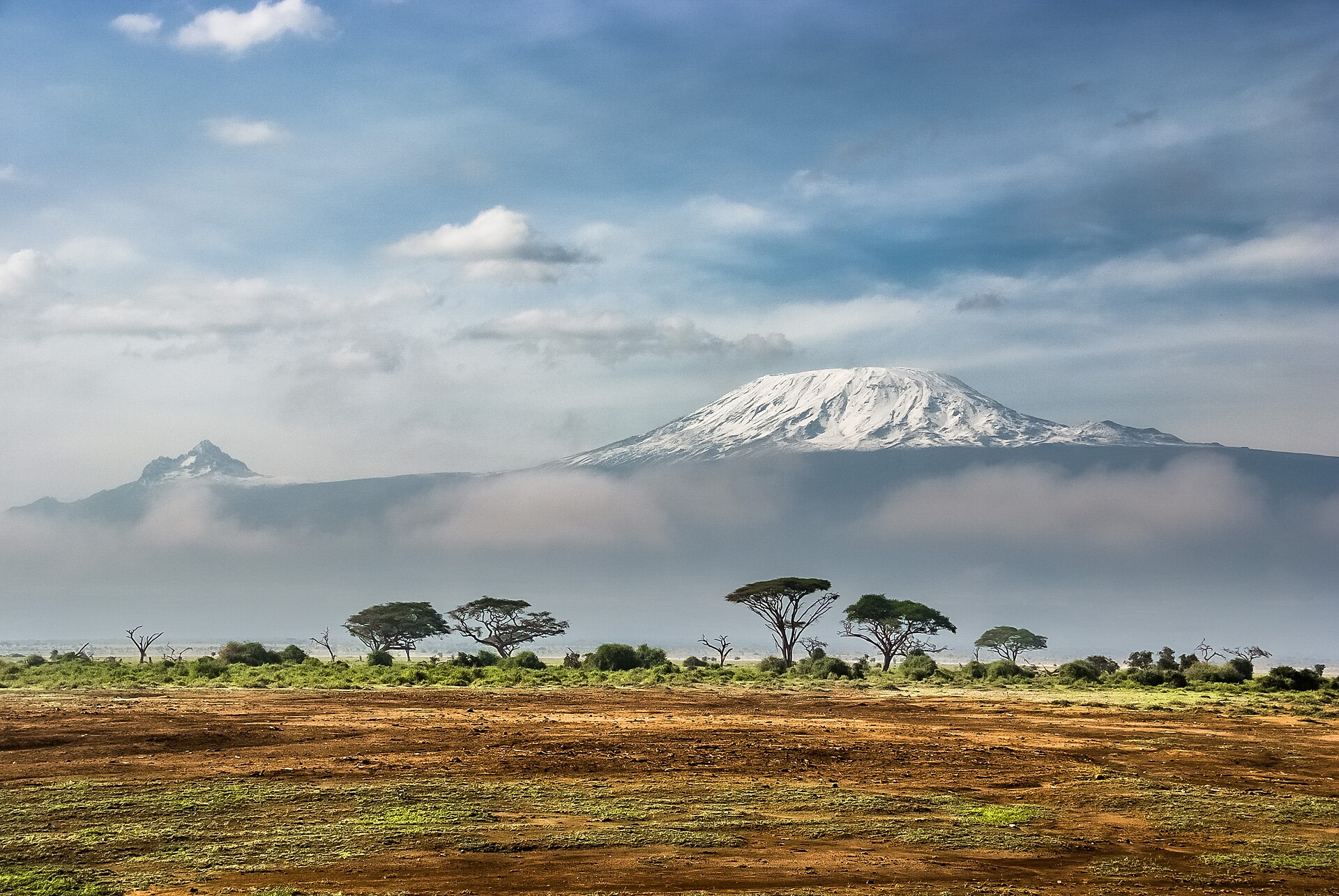
About Mount Kilimanjaro
Kilimanjaro is a broad volcanic massif of Kibo, Mawenzi and Shira, rising from cultivated foothills to a high summit plateau and the Uhuru Peak crater rim.
The mountain is often described as a trekking peak, but the altitude is the central challenge. The route climbs through several climate zones, and a measured acclimatization plan matters more than racing toward the summit night.
Machame, Lemosho and Marangu are different journeys, not interchangeable lines. Their trailheads, overnight rhythms and descent options change how the terrain feels before the high camp and summit push.
Kilimanjaro's glaciers and summit ice have changed markedly over time. Treat the summit as a mountain environment with weather and altitude risk, and confirm park, guide and route requirements before departure.
Documented mountaineering milestones
- 1848 — First European report of the mountain: Johannes Rebmann's account brought Kilimanjaro to wider European attention
- 1889 — First recorded ascent of Uhuru Peak: Hans Meyer, Ludwig Purtscheller and their local support team
Routes and approaches
The principal trekking approaches include Machame, Lemosho, Marangu, Rongai and the Northern Circuit. The route choice changes the acclimatization profile, scenery and descent logistics.
GPX-backed hiking, mountaineering and ski-touring records near Kilimanjaro Region from the Traverse catalog. Metrics appear only when the source provides them.
More mountains in Traverse
Sources and provenance


Mountain information is factual reference only, not a current conditions or safety report.
Page reviewed .